

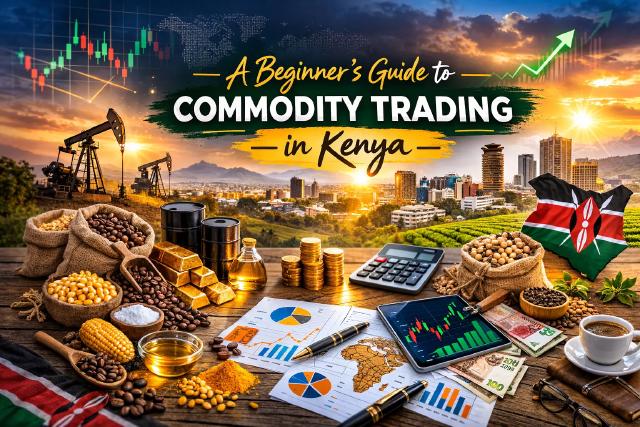
What are commodities?
In online trading, commodities are contracts representing raw materials or tangible goods. They are traded on global exchanges. You do not need to physically own or store barrels of oil or gold bullion to participate. Instead, you capture profits based purely on price movements.
Commodities generally fall into two categories:
- Hard commodities: These are mined or extracted from the earth. Examples include precious metals like gold and silver, energy resources like crude oil, and industrial metals like copper.
- Soft commodities: These are grown or raised. Think agricultural products like wheat, coffee, tea, cotton, and livestock.
You can trade commodities using Contracts for Difference (CFDs), futures contracts, Exchange-Traded Funds (ETFs), or commodity-related stocks. Because they generally show low correlation to traditional equities, commodities are excellent for risk diversification. Prices hinge strictly on supply and demand. Geopolitics, weather patterns, and macroeconomic indicators drive these underlying forces.
Why trade commodities?
The market serves three distinct groups. Speculators chase profit. Producers hedge operational risks. Investors diversify their portfolios.
Capitalizing on Price
Retail traders aim to capitalize on unpredictable price swings. They have no intention of taking physical delivery. Gold is a prime example of this dynamic. As a premier safe-haven asset, it can exhibit significant volatility during periods of geopolitical unrest. Traders frequently use gold CFDs to hedge against unstable currency pairs or sliding equities during economic downturns.
Hedging Operations
Both producers and consumers rely on futures to neutralize price volatility. By purchasing a futures contract, two parties agree to exchange an asset at a predetermined price on a specific future date. Current market prices at expiration become irrelevant.
This is crucial for soft commodities. For instance, a Kenyan coffee farmer can lock in a selling price long before the harvest, safeguarding against a sudden market drop. Conversely, the buyer secures a fixed cost to protect against soaring prices if crops fail.
An Oil Hedging Example
Consider a manufacturing firm reliant on crude oil. Price volatility directly threatens their profit margins. To mitigate this risk, the company enters a futures contract.
Assume current oil is $100 per barrel. The firm contracts to buy 1,000 barrels at $100, delivered in three months.
- If the market jumps to $120, the firm is protected. They exercise the contract and save $20 per barrel.
- If the market drops to $80, the firm must still pay $100 per barrel on the contract. However, they can purchase additional inventory at the lower open market rate.
The contract functions as an insurance policy. It incurs an upfront cost but guarantees predictable budgeting despite market uncertainties.
Diversifying a Portfolio
True financial resilience requires spreading capital across diverse asset classes and geographies. Diversification minimizes the blast radius of a single negative market event. Since commodity prices rarely move in tandem with stocks and bonds, they inject stability. They balance out more volatile holdings to secure a well-rounded portfolio.
What Drives Commodity Prices?
Supply and demand dictate the market. However, several underlying factors manipulate this balance.
- Seasonality: Demand shifts with the calendar. For example, heating oil and natural gas prices often spike during winter months.
- Storage Costs: Physical delivery mandates warehousing. For traders engaged in physical futures, elevated storage costs will eat directly into trading profitability.
- Regulation: Commodity markets operate under strict oversight. Professional traders must thoroughly understand the regulatory frameworks governing their chosen exchanges.
Getting Started
Global commodity markets are highly accessible via online retail brokers. In Kenya, opening a trading account takes only a few minutes.
Access, however, must be paired with discipline. Rely on fundamental and technical analysis to identify optimal entry and exit points. Guard your capital relentlessly. Implement rigorous risk management tools, such as Stop Loss and Take Profit orders, on every single trade.
If you are new to commodities, test your strategies first. Open a risk-free demo account to practice with simulated funds before ever risking real capital.